Types of Rum: A Complete Guide to White, Dark, Spiced & Aged Rum
On this page
Rum comes with more personality than most spirits. One bottle can be light, crisp and made for a refreshing Mojito, while another can be rich, warming and packed with notes of caramel, spice and dried fruit.
That’s where the different types of rum come in.
From clear white rum and golden amber styles to dark, spiced and aged varieties, each type brings something different to the glass. And if you've ever wondered about white rum vs dark rum, the difference goes much deeper than colour.
So, which rum should you choose for cocktails? Is dark rum stronger than white rum? And what actually makes a rum “aged”?
Let’s break it down.
The Main Types of Rum
The most common types of rum you'll come across include:
- White rum
- Gold or amber rum
- Dark rum
- Spiced rum
- Aged rum
- Overproof rum
- Flavoured rum
These categories aren't always completely separate. A rum can be aged and dark, for example, while spiced rum can start with either a lighter or darker rum base.
The colour of a rum can give you clues about its character, but it doesn't tell the whole story. Ageing, filtration, blending and colouring can all influence the final appearance.
What Is White Rum?
White rum is a light-coloured rum known for its clean, relatively subtle profile and versatility in cocktails.
It is also commonly called light or silver rum.
White rum may be unaged, lightly aged and then filtered, or produced using processes designed to create a clear, clean spirit. That means the idea that all white rum is completely unaged isn't quite right.
What does white rum taste like?
White rum is generally lighter in flavour than darker styles, making it a brilliant foundation for cocktails where you want the fruit, citrus, herbs or mixers to shine.
Depending on the rum, you might notice subtle notes of:
- Sugarcane
- Vanilla
- Light sweetness
- Citrus
- Tropical fruit
- Gentle spice
It’s the kind of rum that can sit quietly in the background while the rest of the cocktail brings the party.
What is white rum used for?
White rum is one of the classic choices for refreshing cocktails such as:
- Mojitos
- Daiquiris
- Piña Coladas
- Rum punches
- Tropical highballs
If you're looking for a rum that blends easily with fresh lime, mint, fruit and other vibrant flavours, white rum is often the natural place to start.
What Is Dark Rum?
Dark rum is a deeper-coloured style of rum that is generally associated with richer, fuller and more pronounced flavours.
Dark rum can develop its character through barrel ageing, blending and, depending on the product, added colouring. This is important because dark rum isn't automatically older than white or gold rum. Colour alone isn't a reliable measure of age.
What does dark rum taste like?
Dark rum often has a richer flavour profile than white rum.
You may find notes such as:
- Molasses
- Brown sugar
- Caramel
- Vanilla
- Dried fruit
- Oak
- Baking spice
It's bold without necessarily being harsh, making it a great choice when you want the rum itself to make more of a statement.
What is dark rum used for?
Dark rum works particularly well in cocktails where you want extra depth and warmth.
Popular uses include:
- Dark & Stormy-style cocktails
- Rum punches
- Tiki cocktails
- Richer rum-based serves
- Desserts and baking
It can also be enjoyed on its own or over ice, particularly when you're working with a well-aged, characterful bottle.
White Rum vs Dark Rum: What's the Difference?
Now for the big question: white rum vs dark rum — what's actually different?
The easiest way to think about it is this:
White rum is generally lighter, cleaner and more subtle, while dark rum tends to offer a richer colour and deeper flavour profile.
But the difference isn't simply “clear versus brown”.
| White Rum | Dark Rum |
|---|---|
| Usually clear or very lightly coloured | Amber, brown or deep in colour |
| Light, clean flavour profile | Richer, fuller flavour |
| Often filtered | May be barrel-aged and/or coloured |
| Great for refreshing cocktails | Great for deeper, richer cocktails |
| Works well with citrus and fresh flavours | Works well with warming, bold flavours |
| Mojitos and Daiquiris are classic uses | Dark & Stormy-style and richer cocktails are common |
The production methods behind each rum can vary considerably, so these are useful general guidelines rather than hard rules.
Dark Rum vs White Rum: Which Is Better?
Neither is automatically better.
It comes down to the experience you're after.
Want a bright, refreshing cocktail where lime, mint and fruit take centre stage? White rum is a natural fit.
Want something with more depth, warmth and a richer rum character? Dark rum may be the better choice.
Rum is wonderfully flexible that way. There isn't one “right” bottle for every occasion.
White Rum vs Black Rum: Are They Different?
If you've searched for white rum vs black rum, the terminology can be confusing.
White rum and black rum generally refer to very different visual and flavour styles, but “black rum” isn't always a strict production category. Some very dark rums get their colour through extended barrel ageing, while others may have additional colouring.
That's why it's better to look beyond the colour of the bottle or liquid.
Check the producer's description, ageing information and flavour profile to understand what you're actually getting.
Is White Rum Stronger Than Dark Rum?
No. White rum is not automatically stronger than dark rum, and dark rum is not automatically stronger than white rum.
The strength of rum is determined by its ABV (Alcohol by Volume), not its colour.
For example, a white rum at 40% ABV and a dark rum at 40% ABV have the same alcohol strength by volume.
Equally, you can find rums of different colours with different ABVs.
So if you're comparing white rum vs dark rum based on strength, ignore the colour and check the ABV on the label.
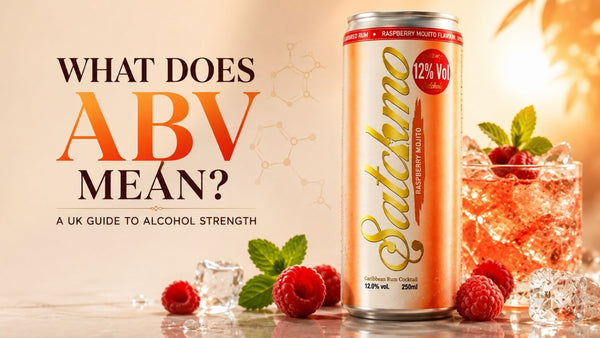
The same principle applies when comparing rum cocktails. If you want to understand alcohol percentages in more detail, our guide to ABV and alcohol strength can help you understand exactly what the percentage on a label means.
Gold Rum: The Middle Ground
Gold rum, sometimes called amber rum, sits visually between white and dark rum.
It often develops its golden colour through time spent in wooden barrels, although production methods and colouring can vary between products.
Flavour-wise, gold rum can offer more body and warmth than a typical white rum without going as deep as some dark styles.
You may find flavours such as:
- Caramel
- Vanilla
- Toasted sugar
- Light spice
- Oak
That makes gold rum particularly versatile.
It's comfortable in cocktails but can also be enjoyable over ice, depending on the bottle.
Spiced Rum: Warm, Bold & Full of Character
Spiced rum is rum that has been flavoured with spices and other flavouring ingredients.
Unlike “dark” or “aged”, which describe characteristics associated with the rum's production and maturation, spiced refers to the flavour profile created by adding spices or flavourings.
Common flavours include:
- Vanilla
- Cinnamon
- Nutmeg
- Clove
- Ginger
- Allspice
The result is warm, aromatic and instantly recognisable.
Spiced rum is particularly popular in simple mixed drinks because its flavour already brings plenty of personality to the glass.
Think cola, ginger beer, tropical fruit or a simple rum-based cocktail.
And if you're in the mood for something with Caribbean warmth and bold fruit flavour, that's exactly the kind of flavour-led thinking that has helped Caribbean-inspired drinks become such a strong part of modern cocktail culture. You can explore more in our guide to the rise of Caribbean-inspired drinks.
Aged Rum: Smooth, Complex & Made to Savour
Aged rum spends time in barrels, allowing the spirit to develop additional flavour and complexity.
The longer and more carefully a rum is matured, the more influence the barrel can have on its character. You might discover notes of:
- Vanilla
- Oak
- Caramel
- Dried fruit
- Toasted spice
- Nuts
Aged rum is often associated with sipping because its layered character can be easier to appreciate without a busy cocktail competing for attention.
But again, don't assume that every dark rum is heavily aged or that every aged rum must be dark. Colour and age aren't interchangeable.
Overproof Rum: When Strength Takes Centre Stage
Overproof rum is bottled at a significantly higher ABV than standard rum.
Some overproof rums reach 60% ABV or more, making them considerably stronger than many everyday bottles. They are often used in small amounts in cocktails, particularly tiki-style drinks, rather than poured like a standard serve.
This is one category where checking the label really matters.
Higher ABV means higher alcohol strength, regardless of whether the rum is white, gold or dark.
What Is the Best White Rum for Cocktails?
There isn't one universal best white rum for cocktails because the right choice depends on the drink.
For bright, refreshing cocktails, look for a white rum with a clean profile that works comfortably with:
- Fresh lime
- Mint
- Tropical fruit
- Coconut
- Simple syrups
- Soda
White rum is especially well suited to cocktails where you want the other ingredients to remain fresh and prominent.
A good Mojito, for example, is all about balance: rum, lime, mint, sweetness and refreshing dilution coming together in one lively glass.
What Is the Best Dark Rum for Cocktails?
The best dark rum for cocktails depends on how much depth you want the rum to bring.
If you're making a richer cocktail, a dark rum with pronounced notes of caramel, molasses, vanilla or spice can add another layer of flavour.
Dark rum is particularly useful when you're working with:
- Ginger
- Cola
- Tropical fruit
- Warm spices
- Rich syrups
- Stronger cocktail flavours
The goal isn't simply to choose the darkest rum you can find. It's to choose a rum whose character works with the rest of the drink.
White Rum vs Dark Rum for Cocktails
Here's a quick way to choose between them.
Choose white rum when you want:
- Bright and refreshing flavours
- Citrus-led cocktails
- Fresh mint and herbs
- A lighter rum profile
- Classic cocktails such as Mojitos and Daiquiris
Choose dark rum when you want:
- More depth
- Richer flavour
- Warming spice notes
- Caramel or molasses character
- A bolder cocktail
And there's no rule saying you have to pick just one.
A well-stocked home bar can have both. One brings the sunshine; the other brings the depth.
Does Dark Rum Mean Older Rum?
No. Dark rum is not necessarily older than white rum.
This is one of the biggest misconceptions around rum.
A rum's colour can be influenced by barrel ageing, filtration, blending and colouring. As a result, a darker-looking rum isn't automatically an older or more complex rum.
If age matters to you, look for specific ageing information rather than judging a bottle purely by its colour.
How to Choose the Right Type of Rum
Choosing rum becomes much easier when you start with the occasion rather than the bottle.
| If you want to... | Try... |
|---|---|
| Make a refreshing Mojito | White rum |
| Make a classic Daiquiri | White rum |
| Add depth to a cocktail | Dark or gold rum |
| Make a warming mixed drink | Spiced rum |
| Enjoy rum slowly over ice | Aged or characterful dark rum |
| Add a stronger punch to a cocktail | Overproof rum, used carefully |
| Explore tropical flavours | White, gold or spiced rum |
There are no rigid rules here. Rum is about discovering the combination that makes your glass come alive.
Why Rum Works So Well in Cocktails
Part of rum's appeal is its incredible range.
White rum can bring a clean foundation. Gold rum adds warmth. Dark rum brings depth. Spiced rum adds instant personality. Aged rum can bring layers that reward slower sipping.
That's a lot of possibilities from one spirit.
And today's cocktail culture is making it easier than ever to enjoy those flavours without needing a fully stocked bar at home. Ready-to-drink cocktails bring carefully developed flavour combinations straight to the can, making them an easy option for gatherings, parties or a relaxed evening.
For more inspiration, take a look at some of the UK's top ready-to-drink cocktails.
Where Does Satchmo Fit In?
Satchmo takes the familiar Caribbean rum cocktail experience and brings it into a convenient ready-to-drink format.
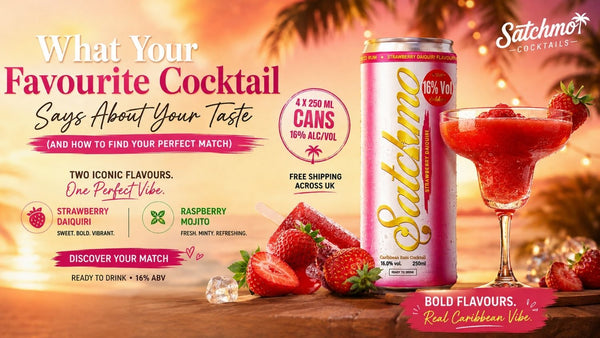
The range includes vibrant flavours such as Raspberry Mojito and Strawberry Daiquiri, available in both 12% and 16% ABV options.
That means you can enjoy the tropical cocktail experience without reaching for the shaker, measuring spirits or building the drink ingredient by ingredient.
If you want to explore the range, discover the Satchmo Raspberry Mojito 16% ABV or the Satchmo Strawberry Daiquiri 16% ABV.
The idea is simple: bold Caribbean-inspired flavour, a chilled can and a good moment worth enjoying.
The Bottom Line: White Rum vs Dark Rum
So, white rum vs dark rum — which one should you choose?
White rum is generally lighter, cleaner and incredibly versatile in refreshing cocktails. Dark rum tends to bring richer colour and deeper flavour, making it a natural choice when you want more warmth and character.
But rum doesn't stop there.
Gold, spiced, aged and overproof styles each bring their own personality to the table. Once you understand what makes them different, choosing the right rum becomes less about following rules and more about finding the flavour that fits your moment.
Whether you're mixing a bright Mojito, building a bold tropical cocktail or simply reaching for a chilled ready-to-drink serve, there's a rum style ready to bring a little more island spirit to the occasion.
Frequently Asked Questions About Types of Rum
What are the main types of rum?
The main types include white rum, gold or amber rum, dark rum, spiced rum, aged rum and overproof rum. There are also flavoured and regional styles, with production methods varying between producers and countries.
What is white rum?
White rum is a clear or lightly coloured rum with a generally clean, light profile. It is widely used in cocktails such as Mojitos, Daiquiris and Piña Coladas.
What is dark rum?
Dark rum is a deeper-coloured style generally associated with richer, fuller flavours. It may gain colour and character through barrel ageing, blending or colouring, so dark colour alone does not prove that a rum is old.
What is the difference between white rum and dark rum?
The main differences are colour, flavour profile and production. White rum is generally lighter and cleaner, while dark rum tends to be richer and more pronounced. However, the exact difference varies between brands and production methods.
Is dark rum stronger than white rum?
Not necessarily. Rum strength is determined by ABV, not colour. A white rum and dark rum can have exactly the same ABV.
Is white rum stronger than dark rum?
No. White rum isn't inherently stronger than dark rum. Always compare the ABV on the label to determine the alcohol strength of a particular rum.
Is white rum the same as light rum?
Usually, yes. “White rum”, “light rum” and “silver rum” are commonly used to describe clear or lightly coloured rum styles, although terminology can vary between producers.
Is black rum the same as dark rum?
Not always. “Black rum” is commonly used for very dark-coloured rum, but there isn't a single universal production method behind the term. Always check the individual product description for details.
What is the best white rum for cocktails?
The best white rum depends on the cocktail and your preferred flavour profile. For refreshing drinks such as Mojitos and Daiquiris, a clean, balanced white rum is often a strong choice because it allows citrus, herbs and fruit to shine.
What is the best dark rum for cocktails?
The best dark rum depends on the drink. Look for a style with the flavour depth that complements richer ingredients such as ginger, tropical fruit, cola, caramel or warming spices.
Does dark rum mean the rum is aged?
No. Dark rum isn't automatically aged for longer than other rum styles. Colour can come from ageing, blending or added colouring, so the label and producer's information are more useful indicators.
Is aged rum the same as dark rum?
No. Aged rum refers to rum that has spent time maturing in barrels, while dark rum describes a style associated with a deeper colour and richer profile. An aged rum doesn't have to be dark, and a dark rum isn't necessarily heavily aged.
What is spiced rum?
Spiced rum is rum that has been flavoured with spices or other flavourings. Common flavours include vanilla, cinnamon, nutmeg, clove and ginger.
Which rum is best for a Mojito?
White rum is the classic choice for a Mojito because its clean, lighter profile works well with fresh mint, lime and sweetness.
Which rum is best for a Daiquiri?
White rum is traditionally used in a Daiquiri. Its lighter character allows the balance of rum, fresh lime and sweetness to remain bright and refreshing.
Can you use dark rum instead of white rum?
You can, but the result will taste different. Dark rum will generally bring a richer and more pronounced character, which may change the balance and overall flavour of a cocktail designed around white rum.
Ready to try Satchmo?
16% ABV. Real Caribbean rum. Bar-quality cocktails in a can — free delivery across the UK.